Verification Shouldn’t Be the Reason You Lose a Good Candidate
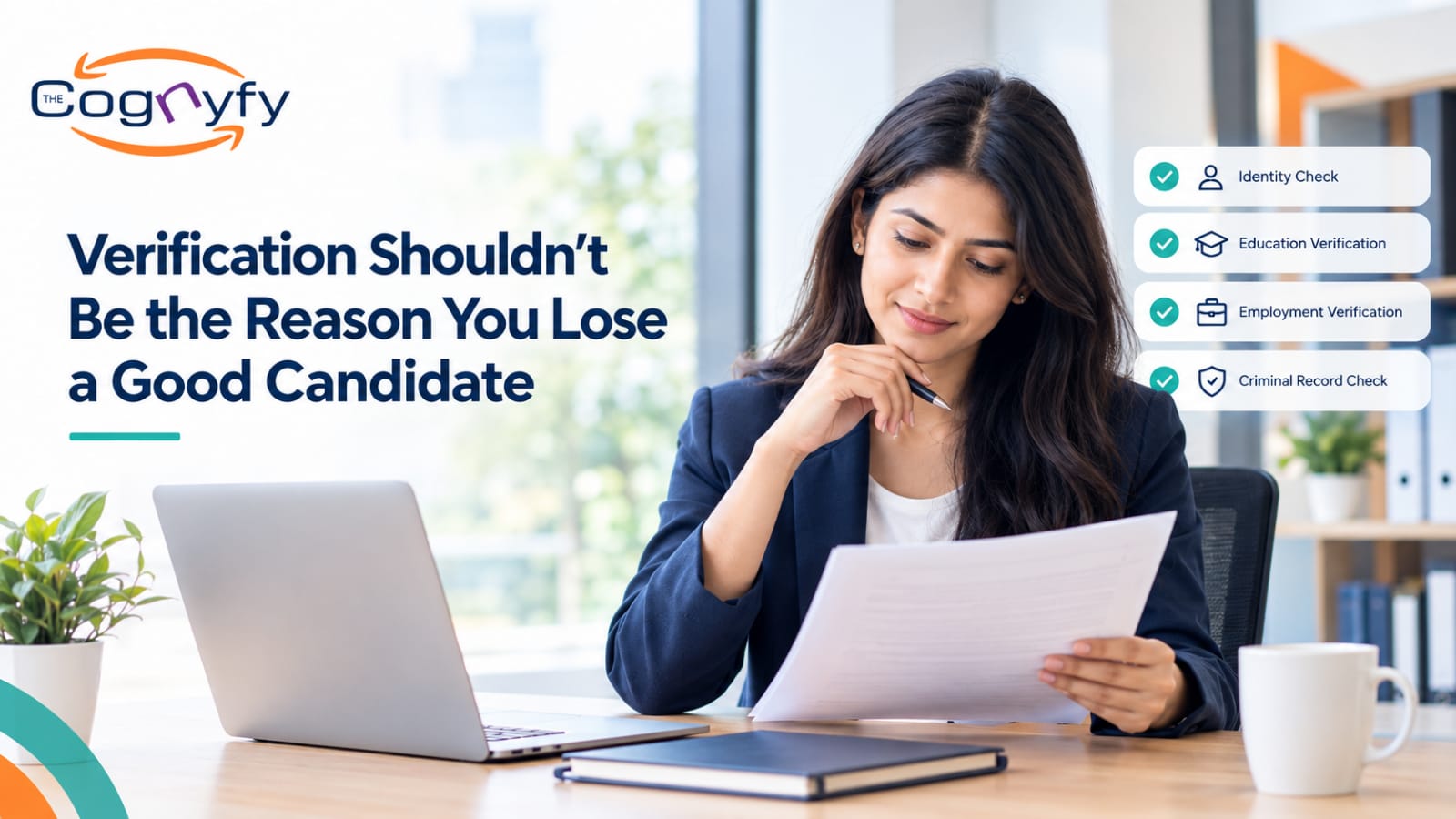
Verification Shouldn’t Be the Reason You Lose a Good Candidate
Picture a Thursday afternoon. The hiring manager has followed up three times about an offer. The candidate has just mentioned that another company is moving quickly. Your director wants to close the position by month-end.
And somewhere in the middle of it all is one important step: background verification.
Many HR teams treat verification as the final hurdle before joining. Documents are submitted, everyone waits, and the hiring process moves forward when the results arrive. But what happens when an educational qualification cannot be confirmed, previous employment details do not match, or an important discrepancy goes unnoticed?
Hiring under pressure can make shortcuts seem harmless until they create a problem.
A Resume Tells a Story. Verification Helps Confirm It.
A resume highlights a candidate's experience, skills, and achievements. That is completely reasonable. But hiring teams still need a reliable way to confirm the information that matters to the role.
Sometimes, a job title or employment period may not match the original records. In other cases, an educational qualification or previous employer may need further verification.
Background verification is not about assuming that candidates are dishonest. It is about making informed, fair, and responsible hiring decisions.
When information is verified appropriately, employers can make decisions with greater confidence while allowing candidates to clarify discrepancies.
What Should a Background Verification Process Cover?
Every role has different requirements. HR teams should choose checks according to the position, applicable laws, business risks, and the candidate's informed consent where required.
Identity and address verification
Confirming identity helps establish that the candidate's records correspond to the right person. Address verification may also be relevant depending on the role and the employer's requirements.
Education and employment verification
Educational qualifications and previous employment details can be checked against appropriate sources. This helps HR teams identify inconsistencies before making a final decision.
Criminal and court record checks
Where legally permissible and relevant to the role, these checks can help employers assess specific risks. Results should be reviewed carefully, with appropriate safeguards and a fair process for resolving discrepancies.
Reference and database checks
Reference checks can provide additional context about a candidate's professional experience. Global database searches may also be appropriate for certain roles or international employment histories.
The goal is not to conduct every possible check for every candidate. It is to conduct the right checks for the right reasons.
Background Verification Should Not Slow Down Hiring
A lengthy verification process can affect candidate experience, joining timelines and the workload of HR teams.
Three common challenges often stand out:
1. Delayed updates
When hiring managers ask for a status update, HR teams should not have to chase multiple people for an answer. Clear progress updates help everyone understand what is pending.
2. Too much manual follow-up
Recruiters already manage interviews, offers, onboarding, and candidate communication. A well-organized verification process can reduce unnecessary coordination and help teams focus on higher-value work.
3. Unclear costs
When verification costs are difficult to predict, organizations may struggle to plan their screening requirements. Transparent pricing helps HR teams make informed decisions about the checks they need.
A structured process, clear communication and timely reporting can make verification easier to manage without compromising accuracy.
Verification Does Not Always End at Joining
Hiring is only one stage of the employee lifecycle.
An employee may move into a role with greater financial responsibility, access to sensitive information or additional compliance requirements. Depending on company policy, applicable law and the nature of the role, further checks may be appropriate.
A consistent approach to pre-employment and post-employment verification can help organizations maintain clear records and manage changing business requirements.
Any additional screening should have a legitimate purpose and follow applicable privacy, consent and employment requirements.
How Cognyfy Supports HR Teams
At Cognyfy, we understand that HR teams need a verification process that supports hiring decisions rather than adding unnecessary complexity.
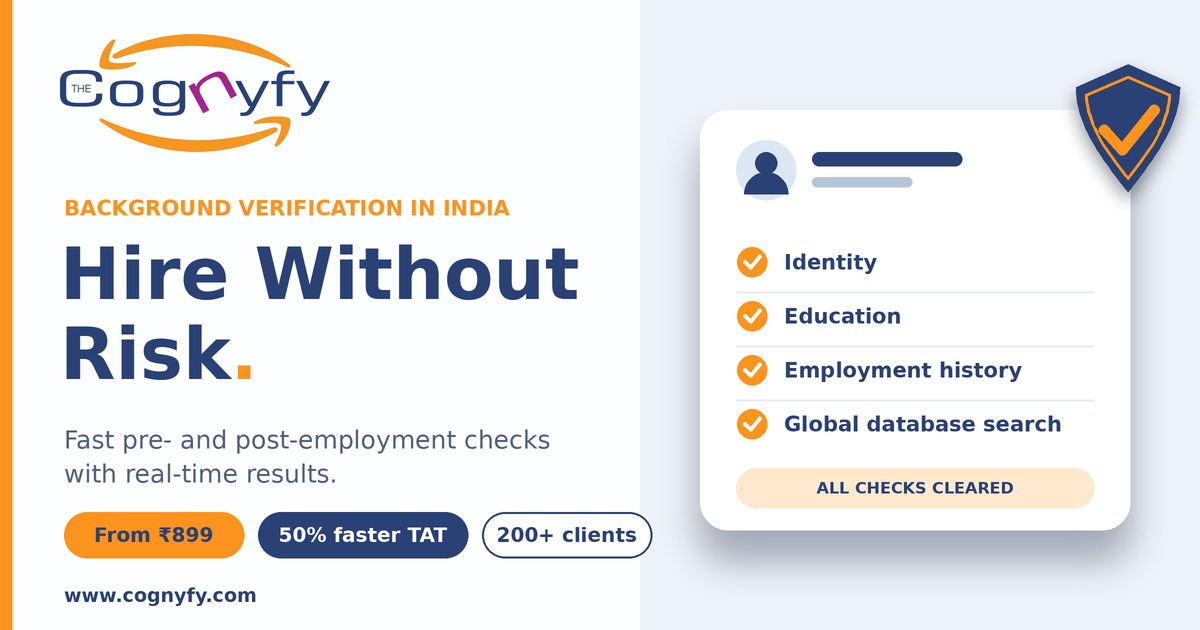
Our background verification services cover checks such as employment, education, identity, address, reference, and criminal record verification, along with additional screening options based on business requirements.
Cognyfy offers pre-employment and post-employment verification services, with reporting and progress visibility designed to support HR teams.
Our service information highlights turnaround times up to 50% faster, more than 200 clients, and experience dating back to 2020. Actual turnaround times depend on the type of check, source response, and case requirements.
With fees starting from ₹899, HR teams can explore suitable screening options according to their needs and budget.
See How Cognyfy Works Before You Decide
Choosing a background verification partner is an important decision. You should understand the process, reporting, and service quality before deciding whether a provider is right for your organization.
Ask Cognyfy about a free sample check and explore the available services at https://www.cognyfy.com.
Hiring already involves enough moving parts. Background verification should help HR teams make confident decisions, protect trust and move forward with clarity.
Cognyfy — Verify before you trust.